BMW, a name synonymous with luxury, performance, and engineering excellence, often piques curiosity with its iconic three-letter acronym. But what does BMW actually stand for, and what is the story behind this prestigious brand? Whether you’re a car enthusiast, a prospective buyer, or simply someone with a keen interest in automotive history, understanding the origins and evolution of BMW provides a fascinating insight into how this German car manufacturer became a global leader in the industry.
Introduction to BMW
BMW, short for Bavarian Motor Works, is more than just a brand; it represents a legacy of quality and innovation. Headquartered in Munich, Germany, BMW has set high standards in the automotive world since its inception. Today, BMW is known not only for its luxury vehicles but also for its impactful presence in motorsports and its commitment to sustainability and cutting-edge technology.
What Does BMW Stand For?
History of BMW’s Name
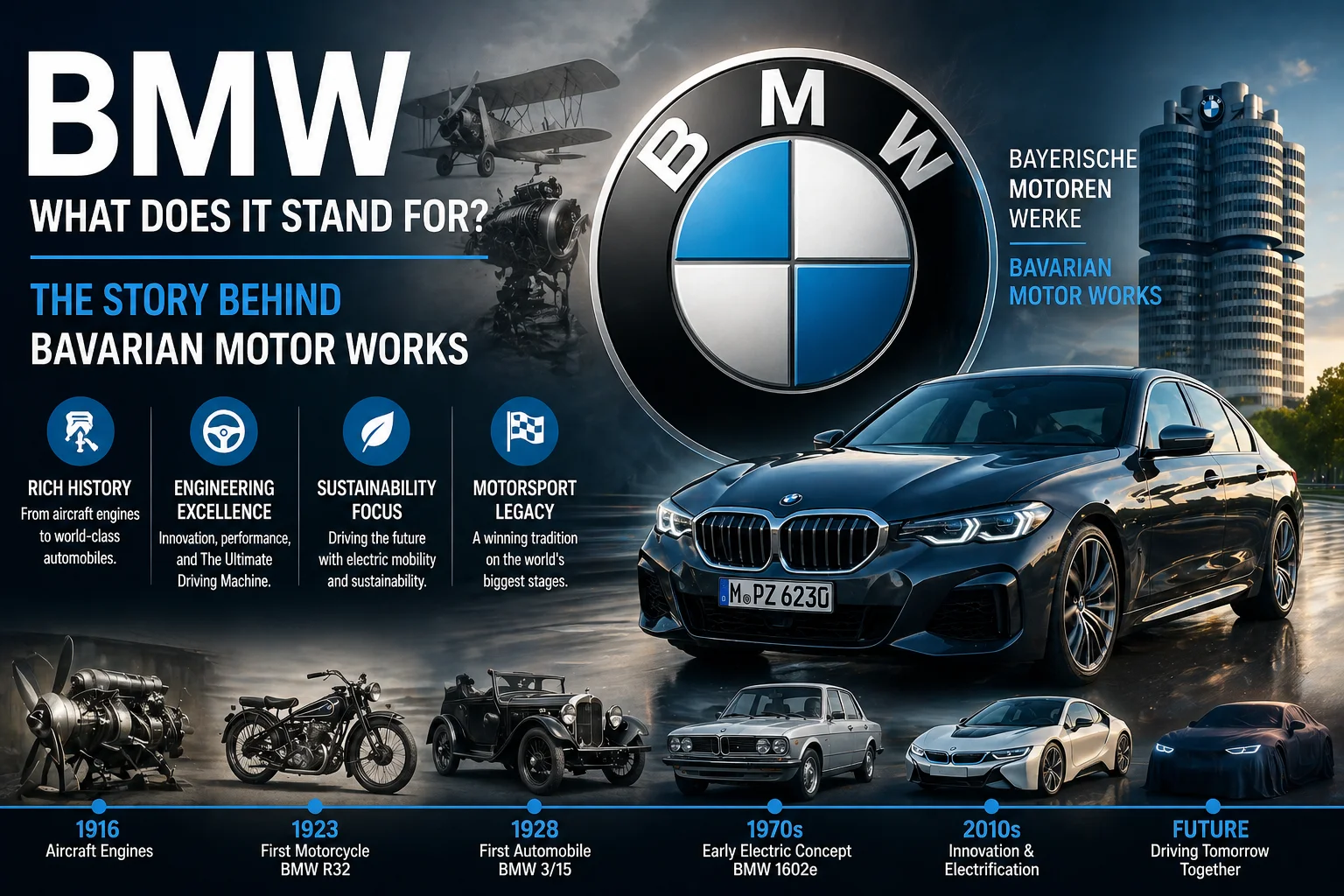
The acronym BMW stands for Bayerische Motoren Werke in German, which translates to Bavarian Motor Works in English. The company’s roots trace back to 1916, when it was founded by Karl Rapp and Franz Josef Popp. Originally, BMW focused on manufacturing aircraft engines, a key industry in early 20th-century Germany. The name reflects the company’s Bavarian heritage and its engineering focus.
Meaning of the Acronym
While “Bavarian Motor Works” may suggest a straightforward meaning, it encapsulates a broader narrative of innovation and adaptability. From aircraft engines to motorcycles and cars, BMW has consistently evolved, embodying its motto, “The Ultimate Driving Machine.” This evolution is a testament to its commitment to engineering excellence.
History of BMW
BMW’s journey from aircraft engines to automobiles is a story of resilience and transformation. After World War I, the Treaty of Versailles prohibited Germany from producing aircraft engines, forcing BMW to pivot towards motorcycle and automobile production. The first BMW motorcycle, the R32, was launched in 1923, followed by the BMW 3/15, the company’s first car, in 1928.
BMW’s Branding and Corporate Philosophy
Evolution of the Logo and Brand Identity
The BMW logo, characterized by a blue and white circle, is often thought to symbolize a spinning aircraft propeller, reflecting its early aviation history. However, the colors actually represent the flag of Bavaria. Over time, the logo has evolved subtly, maintaining its core elements while adapting to contemporary design trends.
Sustainability and Innovation Efforts
In recent years, BMW has made significant strides towards sustainability, emphasizing electric vehicles and reducing carbon emissions. The BMW i series, featuring electric and hybrid models, underscores the brand’s commitment to environmental responsibility without compromising performance.
BMW’s Impact on the Automotive Industry
BMW’s influence extends beyond luxury cars; it has pioneered advancements in automotive technology, including turbocharging, lightweight materials, and driver-assistance systems. Its role in motorsports, particularly Formula 1 and touring car championships, has solidified its reputation for engineering prowess.
Expert Tips and Strategies
For those considering a BMW purchase, understanding its diverse range of models is crucial. From the sporty 3 Series to the luxurious 7 Series, each model offers unique features tailored to different driving preferences. Prospective buyers should consider factors like intended use, budget, and technological features when making their choice.
Case Studies and Real-World Examples
BMW’s successful expansion into emerging markets serves as a case study in strategic brand positioning. In China, for instance, BMW has tailored its offerings to local preferences, leading to impressive market growth. This adaptability showcases BMW’s ability to maintain brand integrity while meeting diverse consumer needs.
Common Challenges and Solutions
One common challenge for BMW owners is maintaining the performance and reliability of their vehicles over time. Regular maintenance, using genuine BMW parts, and staying updated with software upgrades are essential practices for preserving vehicle longevity and performance.
Future Trends and Predictions
Looking ahead, BMW is poised to lead in the electric vehicle sector. With plans to launch several new electric models, BMW aims to be at the forefront of automotive electrification. Additionally, advancements in autonomous driving technology are set to redefine the driving experience, with BMW investing heavily in research and development.
Actionable Takeaways and Implementation Steps
- Research various BMW models to find one that suits your driving needs and budget.
- Consider the long-term benefits of BMW’s sustainability initiatives when choosing a model.
- Stay informed about the latest BMW innovations, particularly in electric and autonomous vehicles.
- Engage with BMW communities and forums to share experiences and gain insights from other enthusiasts.
Frequently Asked Questions
- What does the BMW logo represent?The BMW logo features blue and white colors that represent the Bavarian flag, reflecting the company’s origin, rather than a spinning propeller as commonly believed.
- How did BMW start?BMW began in 1916 as an aircraft engine manufacturer in Germany, founded by Karl Rapp and Franz Josef Popp, and later transitioned to motorcycles and automobiles.
- What is BMW known for?BMW is renowned for its luxury vehicles, engineering excellence, motorsport achievements, and innovations in automotive technology.
- Why did BMW transition from aircraft engines to automobiles?Post-World War I restrictions on aircraft engine production prompted BMW to diversify into motorcycles and cars to sustain its business.
- What are some lesser-known facts about BMW’s history?BMW produced its first car, the BMW 3/15, in 1928, and its first electric vehicle concept, the BMW 1602e, debuted in the 1970s.
- What is BMW’s approach to sustainability?BMW focuses on reducing emissions, expanding its electric vehicle lineup, and implementing sustainable practices across its manufacturing processes.
- How does BMW compare to other luxury brands like Audi or Mercedes-Benz?BMW is often praised for its driving dynamics and performance-oriented vehicles, while competitors like Audi and Mercedes-Benz offer their own unique strengths in design and technology.
As BMW continues to innovate and expand its influence, its rich history and commitment to excellence remain central to its brand identity. Whether you are an enthusiast or a potential buyer, understanding what BMW stands for can enhance your appreciation of this iconic brand. Explore more about BMW’s contributions to the automotive world and consider how its pioneering efforts align with your aspirations in the realm of luxury vehicles.
About the Author