In the intricate world of software development, compiler utilities stand as essential tools, transforming human-readable code into machine-executable instructions. For developers, these utilities not only facilitate the compilation process but also enhance code efficiency and performance. This guide provides an authoritative overview of compiler utilities, delving into their core features, benefits, and how to select the right tool for your needs.
What Are Compiler Utilities?
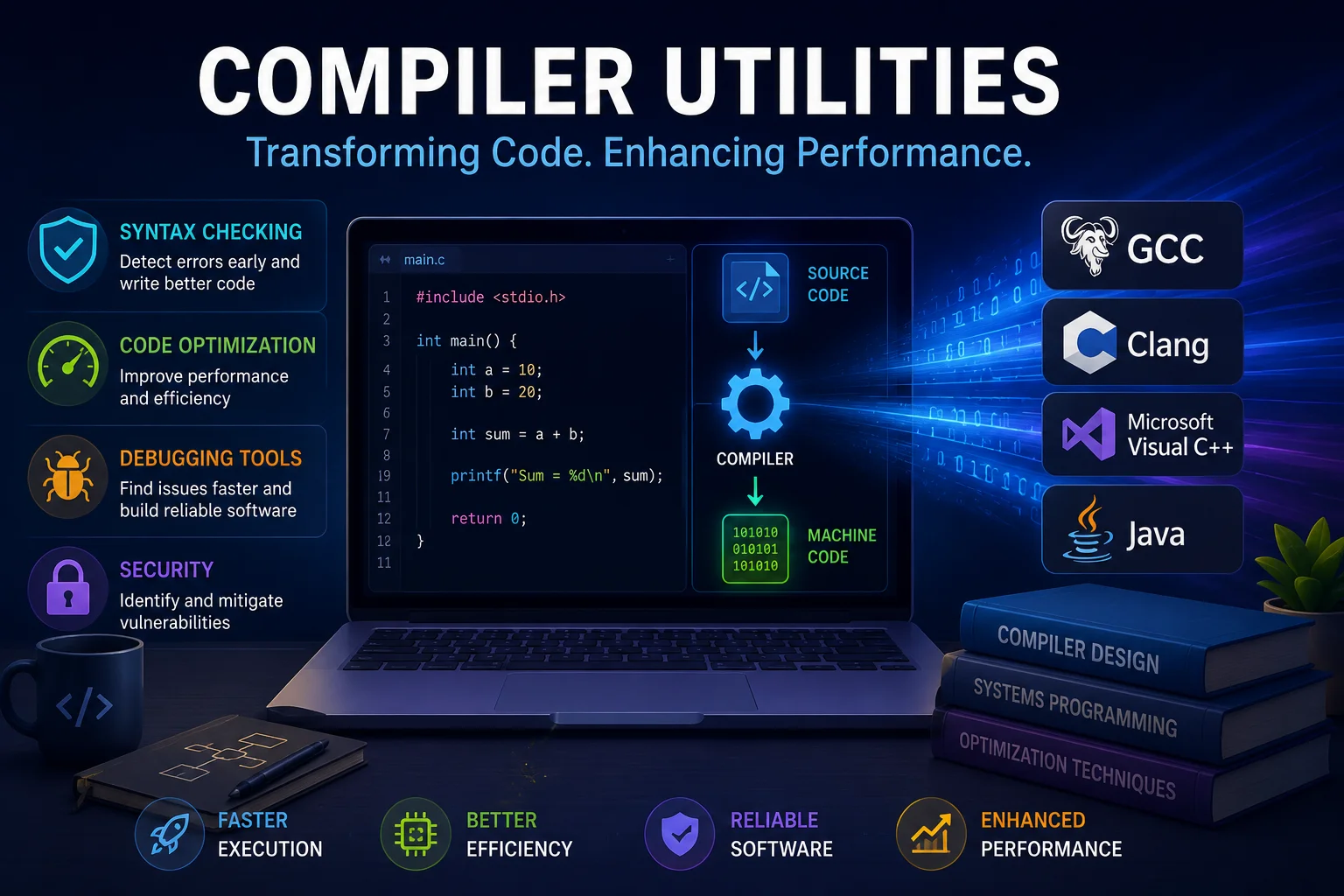
Compiler utilities are specialized programs designed to convert source code written in high-level programming languages into lower-level languages, such as assembly or machine code. This process allows software to run on various hardware platforms. Beyond mere translation, these utilities often include features for syntax checking, code optimization, and debugging, making them indispensable in modern software development.
Key Features of Compiler Utilities
Syntax Checking
Syntax checking is a fundamental feature of compiler utilities. It ensures that the code adheres to the language’s grammatical rules, identifying errors that could prevent successful compilation. This feature saves developers significant time by catching mistakes early in the development cycle.
Code Optimization
Code optimization enhances the performance and efficiency of the compiled code. Compiler utilities achieve this by reorganizing the code to reduce resource consumption without altering its output. This is crucial for applications where speed and efficiency are paramount, such as in gaming or real-time data processing.
Debugging Tools
Debugging tools within compiler utilities help identify and resolve errors within the code. By providing insights into variable states and execution paths, these tools allow developers to pinpoint issues and improve overall software reliability.
Benefits of Using Compiler Utilities
Improved Code Efficiency
Compiler utilities play a pivotal role in enhancing code efficiency. Through optimization techniques, they reduce the execution time and memory footprint of applications, leading to faster and more responsive software.
Enhanced Error Detection
By integrating advanced syntax checking and debugging features, compiler utilities significantly improve error detection capabilities. This integration helps developers identify potential issues early, reducing the risk of runtime errors and improving code quality.
Popular Compiler Utilities
Several compiler utilities are widely used in the industry, each offering unique features and benefits. Below is a comparison of some leading tools:
- GCC (GNU Compiler Collection): An open-source compiler supporting various programming languages and platforms.
- Clang: Known for its fast compilation speed and detailed error messages, making it ideal for C and C++ projects.
- Microsoft Visual C++: Popular for Windows development, offering robust integration with Visual Studio.
- Java Development Kit (JDK): Essential for Java development, providing tools for both compilation and runtime.
How to Choose the Right Compiler Utility
Selecting the right compiler utility involves considering several factors:
- Language Support: Ensure the utility supports the programming languages you use.
- Platform Compatibility: Consider tools that are compatible with your development and deployment platforms.
- Integration Capabilities: Opt for utilities that integrate well with your existing development environment and IDEs.
- Performance Requirements: Evaluate the tool’s optimization capabilities and its impact on compiled code performance.
Use Cases and Industry Applications
Compiler utilities have diverse applications across different industries:
- Embedded Systems: In industries like automotive and aerospace, compiler utilities are used to optimize code for limited resources.
- Finance: High-frequency trading platforms rely on optimized code for fast execution of algorithms.
- Education: Compiler utilities are integral in teaching programming concepts, offering real-time feedback and error checking.
Common Challenges and Solutions
Despite their benefits, developers often face challenges when using compiler utilities:
- Compatibility Issues: Ensuring compatibility across different platforms can be challenging. Solution: Use cross-platform utilities and thorough testing.
- Complexity in Debugging: Debugging complex code can be time-consuming. Solution: Use integrated debugging tools for better insight.
- Performance Bottlenecks: Optimization may introduce new issues. Solution: Regularly profile and test performance after optimizations.
Future Trends and Predictions
The landscape of compiler utilities is evolving with several emerging trends:
- AI-Driven Optimization: AI technologies are being integrated to enhance code optimization, potentially automating complex tasks.
- Cloud-Based Compilation: Cloud services are increasingly providing compilation resources, offering scalability and accessibility.
- Security Enhancements: As security concerns grow, utilities are incorporating features to detect and mitigate vulnerabilities during compilation.
Actionable Takeaways and Implementation Steps
To effectively leverage compiler utilities, consider the following steps:
- Assess your project requirements and align them with the capabilities of available compiler utilities.
- Integrate the chosen utility into your development workflow, ensuring seamless compatibility with your IDE.
- Regularly update your knowledge on emerging tools and trends to capitalize on new optimization techniques.
- Engage in continuous testing and profiling to ensure that your code remains efficient and error-free.
Frequently Asked Questions
- What is a compiler utility and why is it important?
A compiler utility translates source code into machine code, enabling software to run on hardware. It is crucial for ensuring code is error-free and optimized. - How do compiler utilities improve code efficiency?
They optimize code by reducing execution time and resource consumption, enhancing overall software performance. - What are the best compiler utilities available?
Popular choices include GCC, Clang, and Microsoft Visual C++, each offering unique features for different needs. - How can I integrate compiler utilities with popular IDEs?
Most modern IDEs provide plugins or settings for integrating compiler utilities, facilitating seamless development workflows. - Are there compiler utilities for beginners?
Yes, tools like Code::Blocks and Eclipse offer user-friendly interfaces and tutorials, making them suitable for novices. - What role do compiler utilities play in code security?
They help identify and mitigate vulnerabilities during compilation, contributing to more secure software development. - Is it possible to customize a compiler utility?
Advanced users can often create custom plugins or modify open-source utilities to better fit their specific requirements.
By understanding and effectively utilizing compiler utilities, developers can significantly enhance their coding practices, ensuring efficient, optimized, and secure software development. Embracing these tools is not just about keeping pace with industry standards; it’s about setting the bar higher for what your software can achieve. Start exploring the best compiler utility for your needs today and see the difference it can make in your development process.
About the Author